How services get defined?
 Organize your services in a tree

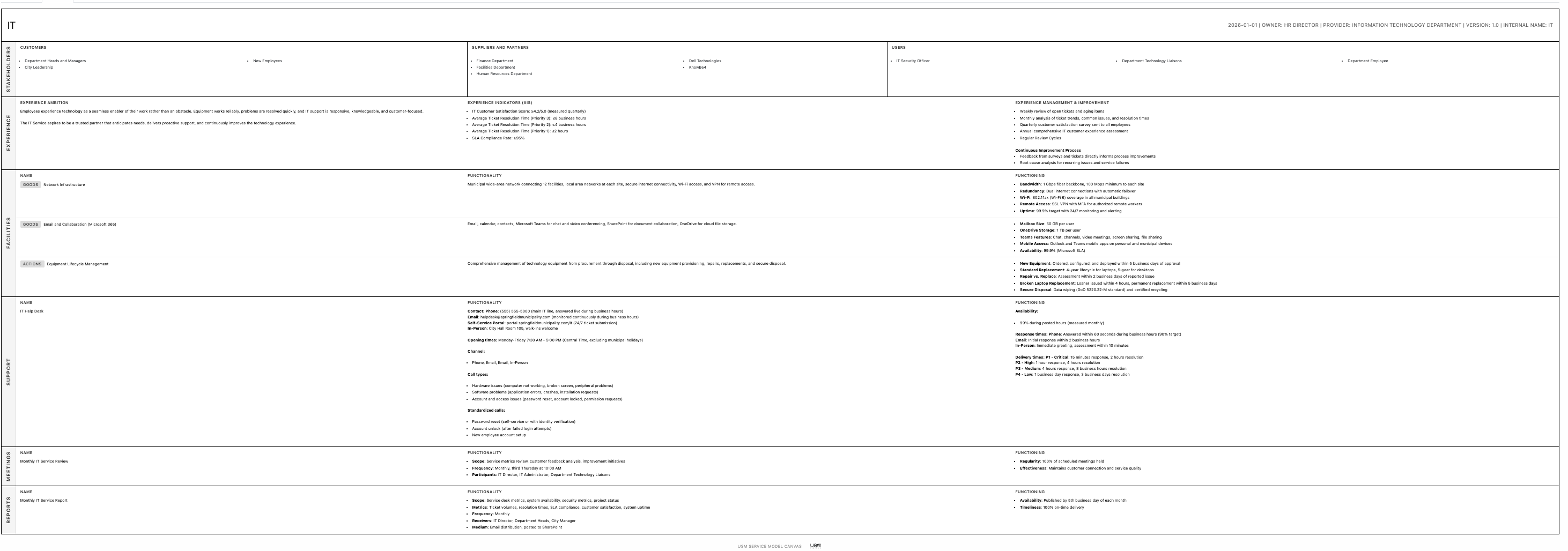
 Collect high-level view of your services on canvas

 Visualize flows as BPMN diagrams

Data, not documents
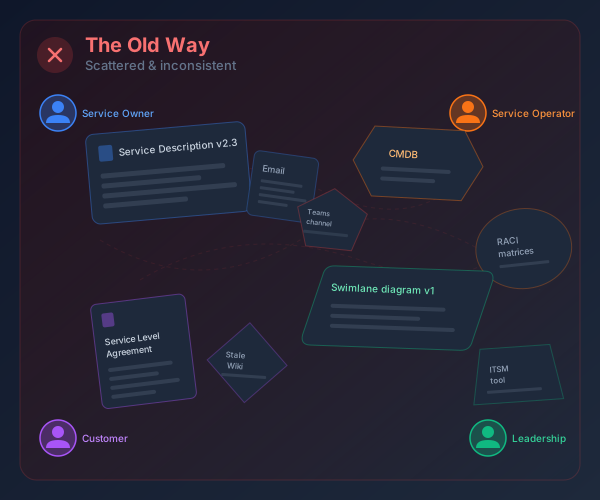
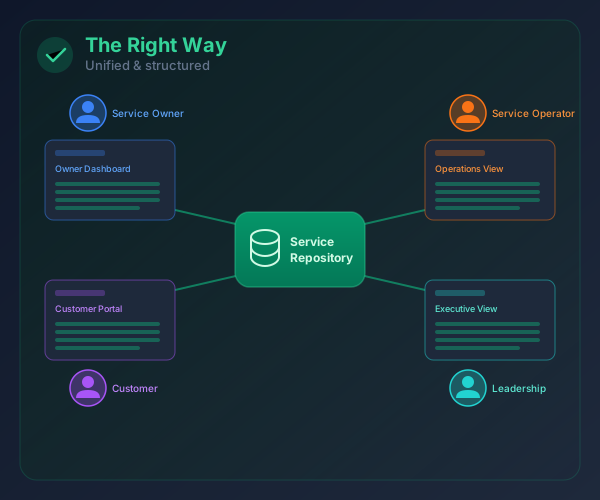
Traditional service documentation lives in Word files, wikis, spreadsheets, ticketing systems, CMDB, emails, chats, and so on. Different stakeholders need different views.
The result? Instead of consistent service definitions, they depend on context. Often key stakeholders either lack the necessary data, or the documents they use may be outdated. Lots of process documentation may be produced for compliance audits, but they rarely benefit daily operations.
Traditional approach
- Information scattered in many systems
- Multiple formats typically used
- Data buried in documents
- Various documents often out of sync
- Cost causes documentation gaps
- Auditing is expensive
usm.tools approach
- Single source of truth
- Multiple perspectives to data
- Views always up-to-date
- Services structured consistently
- Better service chain interoperability
- Cost-efficient audits
Watch and learn
Quick video introductions to get you started
Introduction to USM Tools
Discover how USM Tools transforms scattered service documentation into a unified data repository with multiple perspectives — overview, delivery, and agreements — all staying in sync automatically.
Navigating the platform
A quick walkthrough of the main navigation: switch between services and tenants, access the three core dimensions, and use supporting modules like Data, Glossary, and Search.
Core modules
Aligned with how services are defined according to the USM methodology
Overview
Define your services at a high level using the USM Service Model Canvas. Organize services into a tree, define facilities and support, service experience, and link customers, suppliers, and users to each service.
Build your service model canvas — a high-level map connecting customers with your offering and tracking your progress.
Routine editor
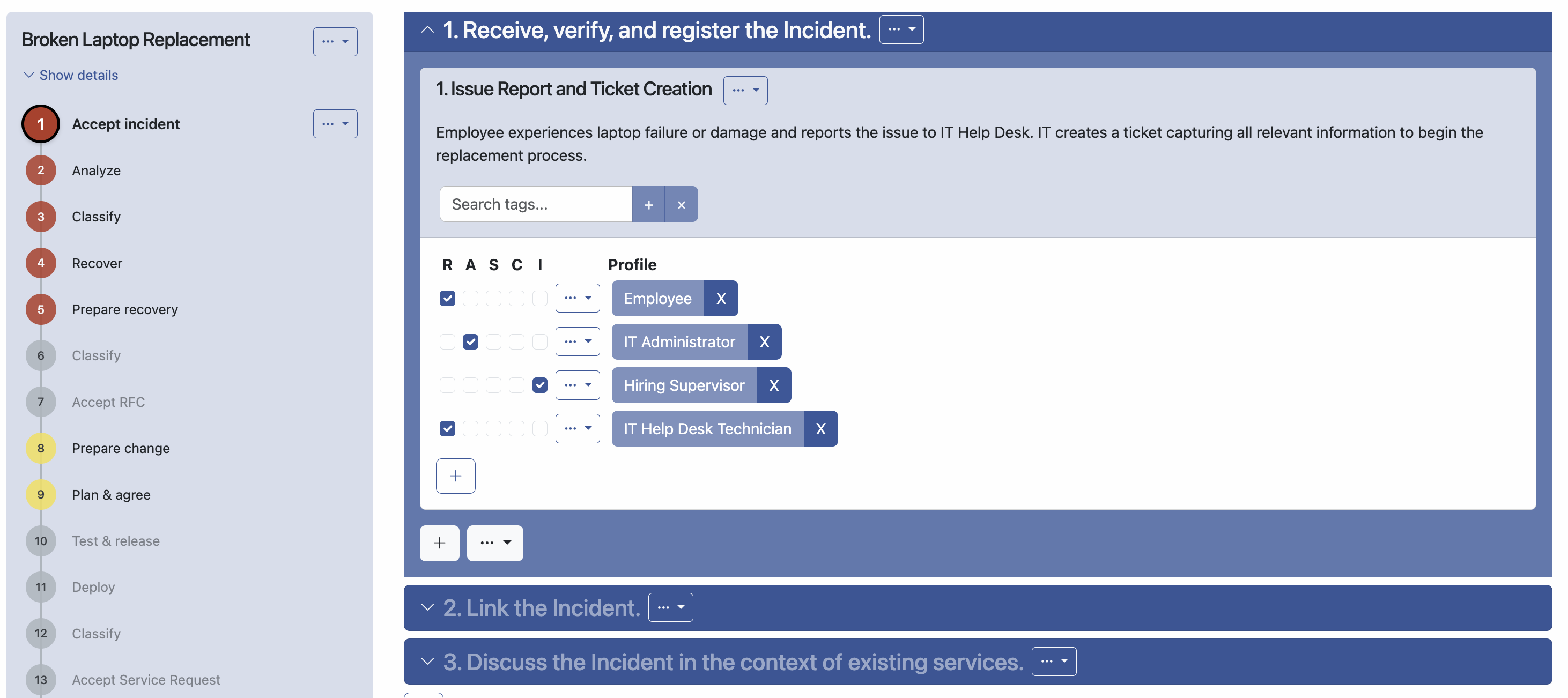
Build routines step by step with the visual editor. Add actions, assign RASCI responsibilities to profiles, and define the detailed work instructions for each activity.
Step through the routine editor: navigate steps, add actions, and assign Responsible, Accountable, Supporting, Consulted, and Informed roles.
Agreements
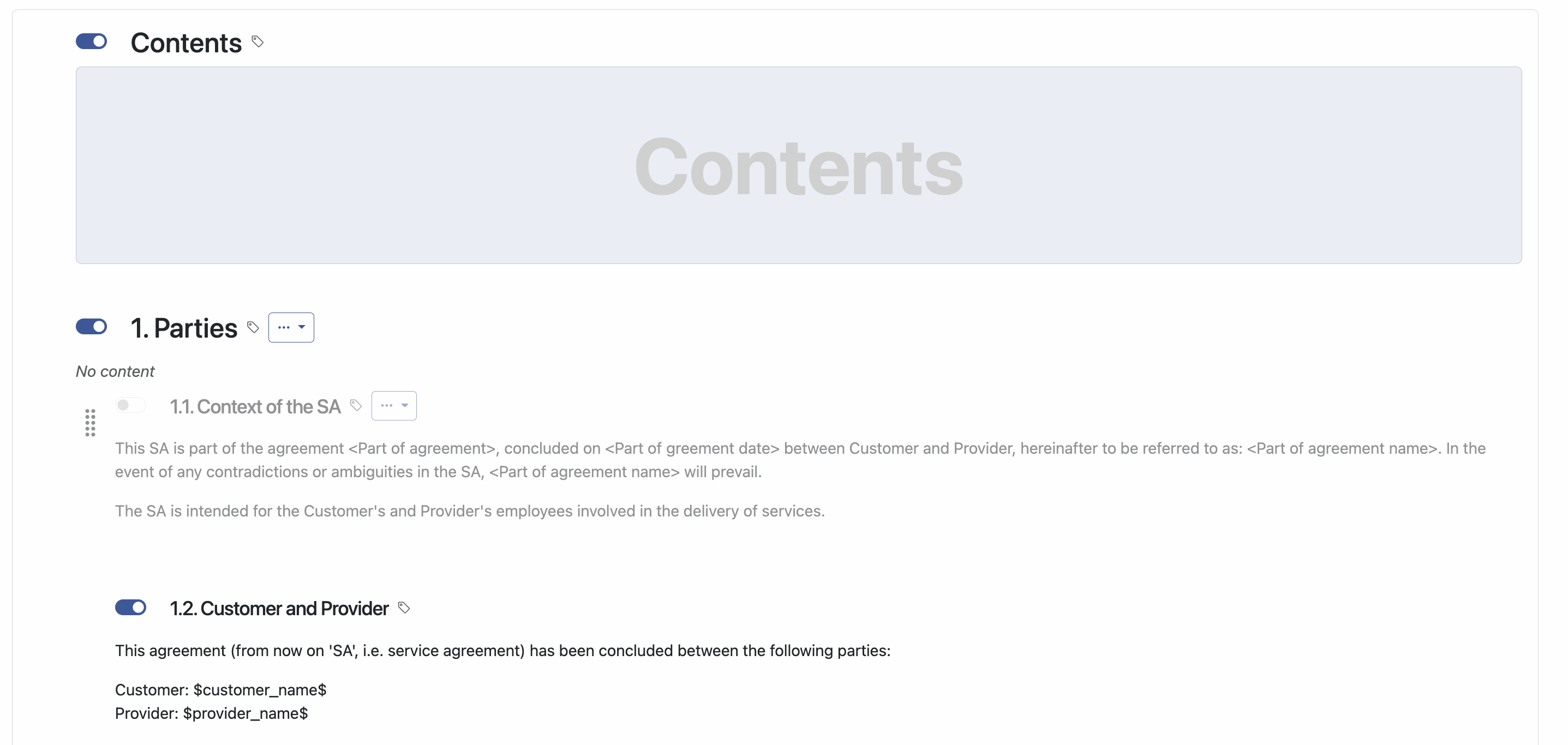
Create comprehensive Service Agreements with custom document structure, templates with placeholders, measurable KPIs, and PDF export. Transform definitions into formal, shareable documents.
Create living documents that combine narrative text with auto-generated content from your service data.
Delivery
Define the routines (processes) that make services work. USM process model provides structure with 8 built-in workflow templates. RASCI responsibility assignments ensure clear accountability.
Learn how USM's five core processes and eight workflow paths structure your service delivery routines.
Flows
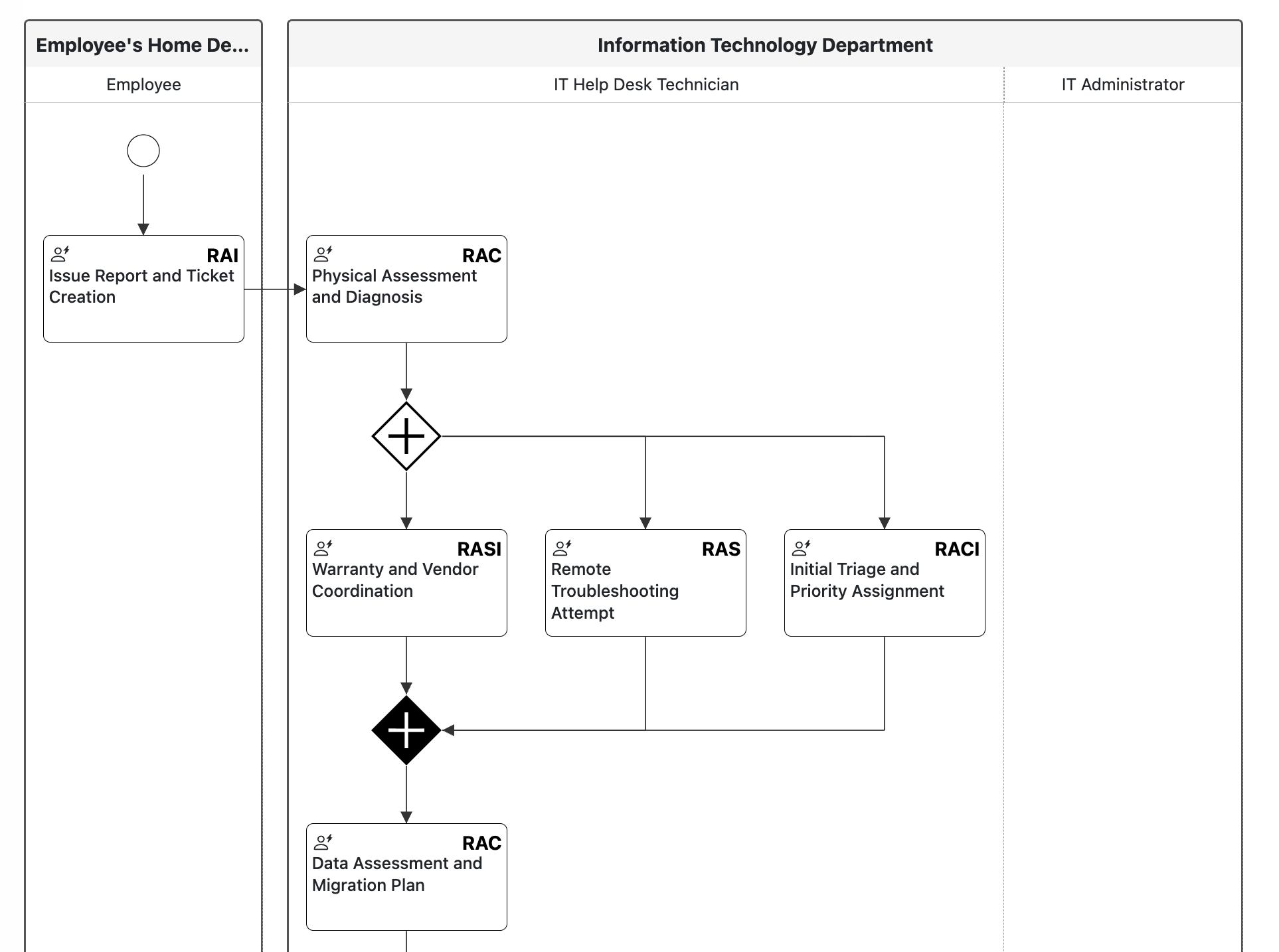
Visualize routines as BPMN process diagrams with swimlanes showing roles, decision points, parallel paths, and task groupings. Export to BPMN format for use in other tools.
Automatically generate swimlane diagrams from your routines, organized by profile and organization.
Supporting modules
Additional capabilities that support the core service definition work
Tenants and users
Manage separate customer environments with their own services, data, and user access. Complete data isolation between organizations.
Reports
Generate tailored reports with configurable templates, dynamic filtering, and PDF export. Different stakeholders see relevant information.
Create polished PDF documents from your service data using flexible templates with flow diagrams, responsibility matrices, and more.
Search
Find information quickly across your entire service portfolio. Results organized hierarchically showing where matches occur.
Import and export
Move data efficiently with tenant export for backup/migration. LLM-powered document analysis extracts information from existing PDFs or other documents.
Data
Import the data supporting your service specifications from primary sources, so that you can include relevant data directly in your reports. You can import documents, customer and supplier records, risks, and more. In USM this is called the virtual Managed Infrastructure Register.
Glossaries
Maintain consistent terminology with multi-language glossary support. Define terms once and reuse across services.
Built on USM methodology
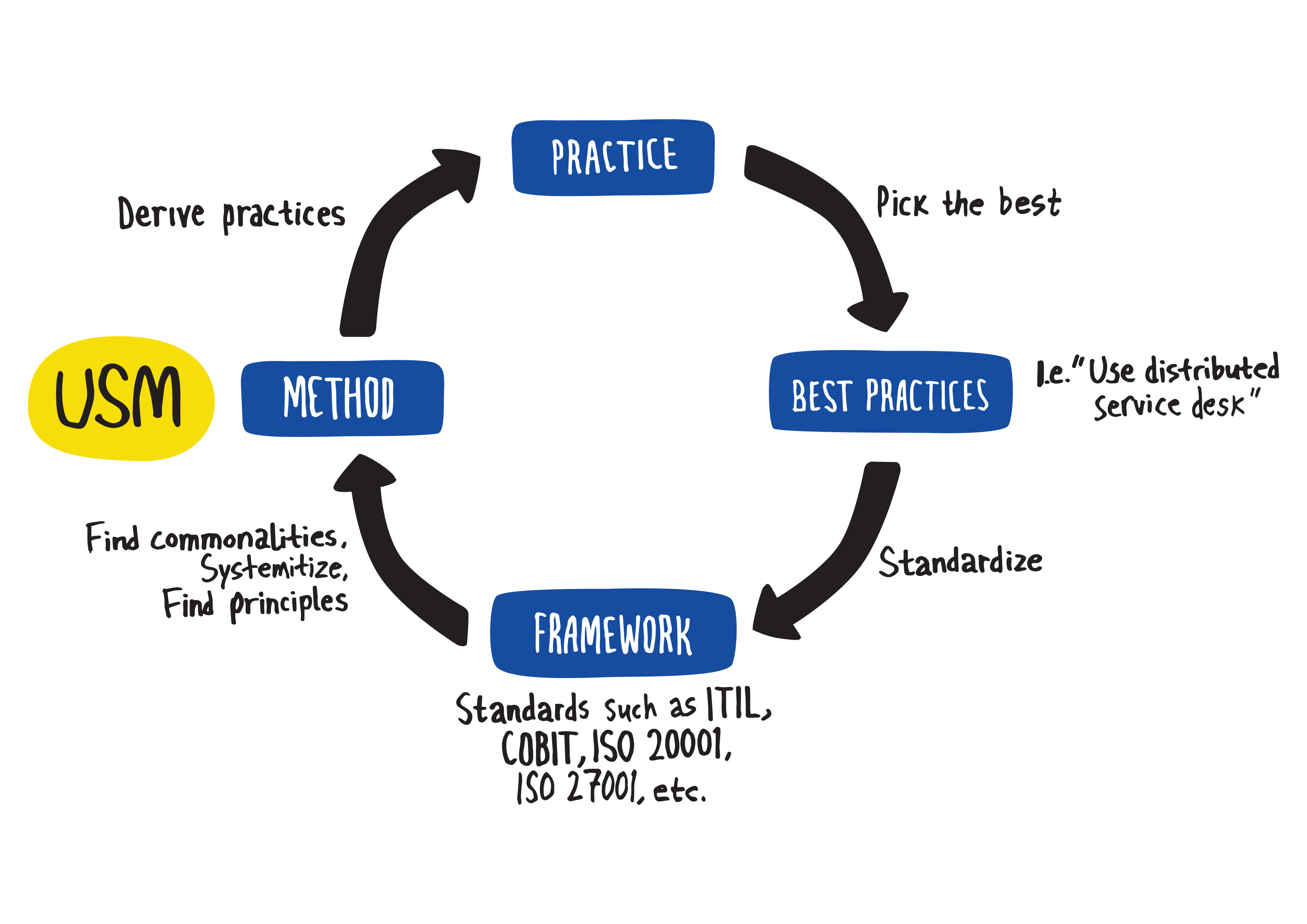
USM is based on principles, distilled from best practices from frameworks like ITIL, COBIT, and various ISO standards, into unified method that works for any service.
- Universal - Works for any type of service
- Unified - One consistent model across your organization
- Learnable - Easy to understand and apply
- Open - Free methodology, no vendor lock-in
Ready to transform your service management?
Request a demo and we'll be in touch